
How to plan a garage cleanout without making a bigger mess
Create one clear aisle and four destinations before opening boxes. Sort small areas to completion, then schedule removal after the keep and donation piles have a home.
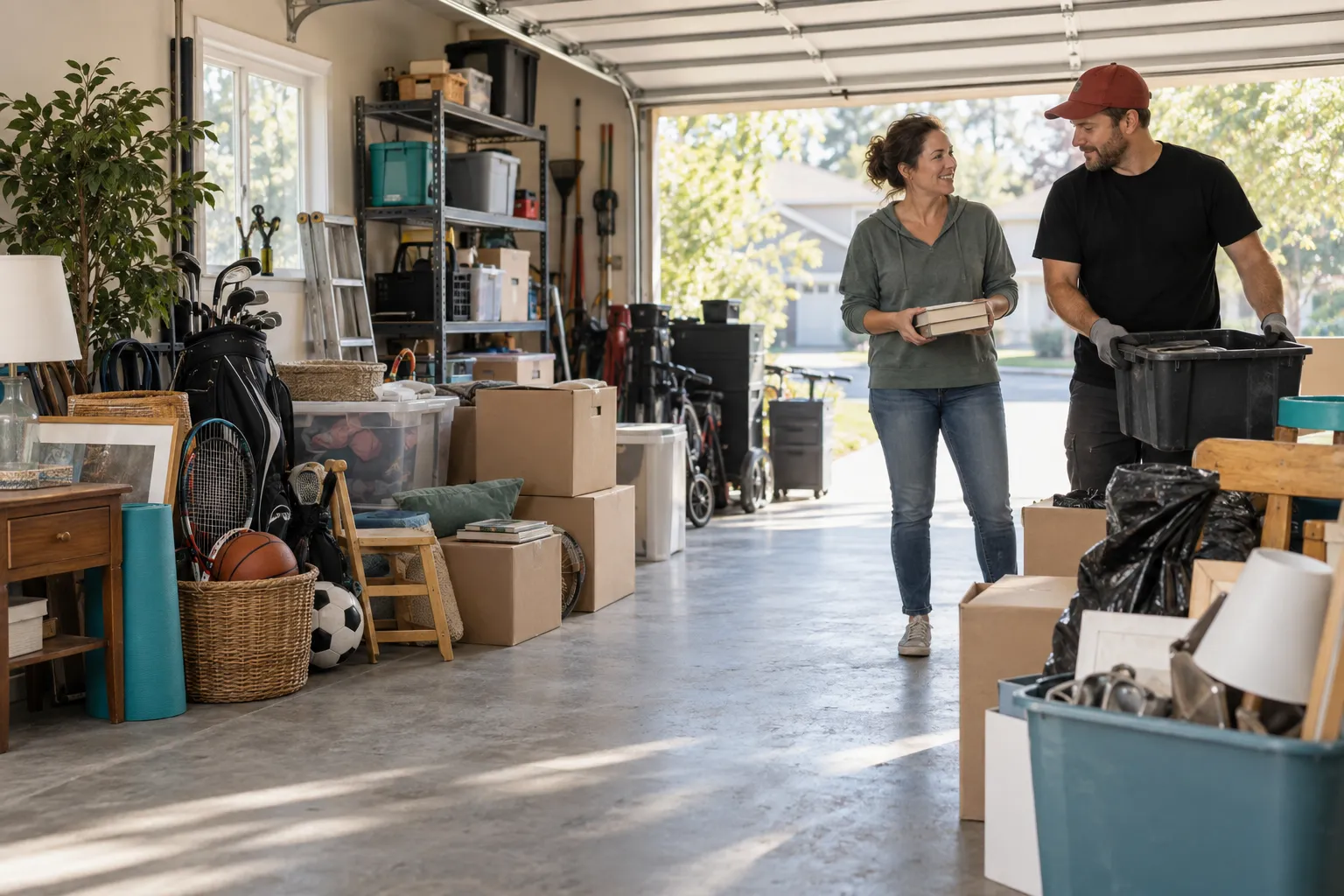
The fastest way to stall a garage cleanout is to pull everything into the driveway and decide later. Keep most items where they are, establish destinations, and finish one shelf or wall at a time.
Set four decision zones
| Zone | What belongs there | Finish line |
|---|---|---|
| Keep | Items you use, seasonal goods with a known purpose, and tools that work. | A named shelf, cabinet or indoor location. |
| Give or sell | Clean, usable items with a confirmed recipient or realistic sale plan. | A pickup date or drop-off destination. |
| Remove | Broken furniture, worn household goods, empty boxes and approved non-hazardous clutter. | A complete list for the hauler. |
| Special handling | Paint, oil, chemicals, batteries, fuel, propane cylinders and unknown liquids. | Directions from an approved local facility. |
Use floor tape, empty corners or separate shelving bays if they do not create a tripping hazard. Avoid piling goods in front of the door or across the main path. The removal crew will need that aisle later.
Work in an order that protects the path
- Clear a narrow aisle. Make a safe route from the garage interior to the main door.
- Remove obvious trash. Bag ordinary loose waste, but leave chemicals and unknown containers alone.
- Finish one small section. Choose one shelf, cabinet or three-foot wall segment.
- Assign every kept item a location. A “decide later” pile becomes a second cleanout.
- Move approved removal items near the route. Keep heavy pieces in place if moving them would be unsafe.
- Confirm donation destinations. Do not count an item as donated until a recipient accepts it.
Stop if a container is leaking, swollen, rusted through or missing its label. Keep people and pets away and ask the appropriate local authority how to handle it.
Treat the chemical shelf as a separate project
EPA lists paint, cleaners, oils, batteries and pesticides among common household hazardous wastes. It says to keep products in their original containers, retain labels and never mix leftovers because incompatible materials may react, ignite or explode. Read EPA’s household hazardous waste guidance (accessed September 18, 2026).
The Town of Farragut directs residents to the Solid Waste Management Facility for household hazardous waste. Its official page also lists Dutchtown Convenience Center for recycling and trash services. Confirm current acceptance rules and hours before loading your vehicle. Check Farragut’s garbage and recycling resources (accessed September 18, 2026).
A sealed box marked “garage” is not enough information when it contains chemicals, batteries or pressurized cylinders. Open and sort boxes you can inspect safely, and ask for help with anything uncertain.
Give the hauler a count it can use
Group the final list by item type and size. “Six storage bins, one broken shelving unit, two bicycles and about twenty flattened boxes” is more useful than “half a garage.” Add dense items, stairs, a steep driveway, a gate or a long carry.
- The keep zone has assigned storage.
- Donation items have a confirmed destination.
- Hazardous products are separated.
- The removal list includes quantities and large dimensions.
- The path from garage to driveway is clear.
- Extra items will be discussed before loading.
Schedule removal after the sorting decisions are done. That way the estimate reflects the real load, and the cleared space stays clear when the crew leaves.
Sources
- U.S. EPA: Household Hazardous Waste, nationwide guidance, accessed September 18, 2026.
- Town of Farragut: Garbage & Recycling, Farragut, Tennessee, accessed September 18, 2026.